Wednesday was interesting. No, we're not at a decision point yet. Yes, I've had a referral, which led to an interview, which led to an appointment, which now leads to another appointment, which leads to...??? Yes, this is normal. What am I talking about? I'm talking about the evaluation of my Adult ADHD and how to ultimately determine what we will do about it.
The first step was my talking with my primary physician and getting him to agree with me to start the process of evaluation (that was no problem at all, actually; he was happy to help and get the ball rolling). The second part was to have a nurse practitioner call me and set up a phone interview and discuss a number of the basic areas that would have them determine, in the roughest sense, if I was someone that actually should come in. That was also a pretty easy hurdle to overcome, as I was able to answer pretty handily any of the aspects they would normally look for (and I think I added a few of my own that made them sure it made sense to have me come in for a proper evaluation).
On Wednesday, I went in for a longer form discussion with a Social Worker. This is the process that Kaiser uses to make sure to weed out any potential "fakes"; Ritalin and their class of medications are central nervous system agonists; I'm sure that a number of people try to go in and get the legal equivalent of cocaine/methamphetamine under false pretenses, so this was a chance for a trained individual to have an extended conversation with me, to talk out the details, and to propose questions and treatment ideas other than drugs.
I came away with some interesting thoughts from this, and one that I'd never really considered before. How's this for a re framing of an old problem... I fought against taking Ritalin and such drugs because I didn't like the way it altered my personality. At least, that's what I'd always said. This really piqued the social worker's interest because, for most people, that's a very unusual reaction. The large majority of people do not have such a reaction to it, or any other drugs in its class. Ritalin is not a psych-therapy drug in the classic sense; it doesn't alter brain chemistry or act to change mood the way drugs like Xanax or Zoloft do. So why would I have that kind of reaction? Again, the tester in me decided to play "what if..." and talk it out, and here's what I came up with.
As a kid, I really resented having to be treated for this. Why was I being singled out? Why were my other friends, who seemed just as happy and energetic as me, not being treated this way? It felt to me like my parents and others just wanted me to shut up, sit down, and not bother anyone. Fine, that's how we're going to play this? Then that's how I'll be. In short, was there a personality change... or did I at an early age decide to be passive aggressive about it and say "fine, you want me to be quiet? Try this on for size!" I honestly don't know, but suffice it to say, there was enough going on in my youth that that would have been a very legitimate explanation.
Also, one of the factors that encouraged me to stop taking medication was simple. I was having some success as a musical performer, in an environment that rewarded my creativity, my spontaneity, my wildness, and my over-the-top demeanor. It wasn't that the medication wasn't "effective"; it could have been that I wasn't willing then to overcome the resentment of having to take it, and then, later, finding a niche where my "defect" was seen as a "feature", and having the platform to exploit it for all it was worth.
With the end of this meeting, I have now been scheduled to see an actual psychiatrist, and then we shall see if and what treatments make sense. I mentioned that I was open to all options. If it meant medication, OK, I was willing to give it an honest shake, unlike my youth where I resented that kind of intrusion. There's also a behavioral element that is a possibility, including individual and group consultation, potential classes and the ability to interact with others dealing with the same issues. I expressed I was open to participating in those activities. It's good to know that there are options that exist now that didn't when I was younger, and the opportunity to interact with others who may share many of the challenges I do. It's possible I may have some answers that might help them!. The most telling, and for me, encouraging aspect of this, was when I talked about all this with my kids. My son was very quick to offer suggestions, including some of the avenues that have worked for many of his friends. I think we've reached point where, at least for my son's generation, ADHD isn't seen as the same stigma it was when I was a kid. It's not seen as a black mark on your character or on your soul. It's just a part of life some people have to deal with.
One aspect of TESTHEAD that I have tried to keep as part of its mission is the human side of testing, and the things that I have learned along the way. That means that this site goes well beyond just talking about software testing in isolation. In many ways, my testing is informed by the very mind that makes me ask questions. I talk... a lot! Sometimes in circles. Often needing to be reminded of what's important and what's not. What tangents are potentially fruitless, and which ones might yield really good information. In short, understanding testing means understanding the mind(s) that process the information they receive, and the ways they go about receiving it. Thus, to me, exploring Adult ADHD fits well into the overall scheme of software testing. In this case, I'm exploring a very different software program... only this time, I don't have a developer to turn to and discuss how to fix the bugs... I AM THE DEVELOPER, and more to the point, I have some interesting constraints (or potential features) to work with.
Often, I seem to come back to the Talking Heads "Once in a Lifetime". For some reason, these verses resonate with me today...
You may ask yourself, what is that beautiful house?
You may ask yourself, where does that highway lead to?
You may ask yourself, am I right, am I wrong?
You may say to yourself, my god, what have I done?
Unlike the song, though, I've decided that "Same As It Ever Was" need not be the answer. Stay tuned for further developments :).
Friday, October 5, 2012


Thursday, October 4, 2012
Codecademy Turns Ruby!
 Have you seen the news? Looks like Codecademy has added a few new modules to its site. Now, in addition to learning JavaScript, Python and HTML/CSS, Ruby is now something to play with, too.
Having found Codecademy's model somewhat interesting in the past, I'm definitely interested in seeing what this system has to offer. At first glance, it looks like they cover the basics, and get into Control Flow, Looping, Arrays and Hashes, and dealing with blocks and sorting of data.
I sat down today and did the Introduction to Ruby, just to see how it flows, and I have to say, the folks at Codecademy have been taking notes and responding to issues that have been reported. The Intro for Ruby went very smoothly. Even when I was deliberately being stupid, it was clear enough to explain where I was going wrong and what I could do to get back on track. The information in the side bars was clear and well formatted, and the interpreters responses were likewise clear and made sense to help the user understand where they are.
The gameification aspects are kind of fun, as is the ability to brag up your completion level if you want to. Some might chuckle or denigrate the gameification; I say, if it motivates you to do more and learn more, then more power to them.
This year, I've seen Codecademy make great strides in going from a platform of interesting, yet sparse, information, to one where a sizable amount of information can be had. I wish them lots more success, eyeballs and developers willing to share. Hopefully I can get to the point to where I know enough to return the favor.
Monday, October 1, 2012
Some Light in the Shadows: A Follow-Up
I had a nice conversation recently, and went through a list of questions that was both very familiar and yet unique. Prior to my first official appointment for Adult ADHD, I had a phone evaluation, just a basic "who are you and where do you think you are with this issue?" kind of thing. It's interesting going through this process as an adult, where I'm the one initiating the conversation rather than my parents/another physician. When I was a kid, I was dragged in to get evaluated and get treated, and I didn't really want to be. Now, however, I am both curious and strongly invested. It makes all the difference.
Many of the questions were the same pat ones I remembered; "Do you have trouble concentrating"? "Do you have a high energy level"? Well, yeah, or I wouldn't be having this discussion. Sorry, pat snarky answers there, too, but we have to start somewhere. Then we shifted gears a bit. Tell me about your sleep patterns. How do you deal with anxiety and frustration? Do you own firearms? Have you ever had thoughts of suicide? I get the need to ask these questions, because it could determine where on the spectrum I am. It definitely felt strange answering some of these. Even though I knew them, it felt very different telling them to someone else.
One part of the story that, as we were discussing things and how I'd "behaviorally coped" without medication, and if I had any external habits or if I used any illicit drugs, led me to an interesting realization. While I did stop taking the pills when I was younger, I replaced them, not intentionally, with something else… caffeine. More specifically, black coffee. Yes, those of you who know about my religious upbringing and heritage may be raising an eyebrow or two about now. It's true, I was inactive in my faith for several years, and this shift coincided with this time. For several years, I drank the equivalent of a full pot of the stuff a day, or about a gram of caffeine daily. My productivity during this time period was phenomenal, and in many ways, I'd considered that I'd beaten ADHD. Not true, I'd just replaced one medication with another, and one not particularly well suited to that purpose.
Around the end of 1993, I decided I wanted to go back to church, and embrace the life I'd not lived for many years. With it, I made a commitment to get off coffee, completely. It took me a full three months to detox from it, and afterwards, I felt radically different, but during that time, I felt many of the old hallmarks creeping back in. The lack of attention, the restlessness, the erratic sleep patterns, etc. Thus, I settled into a strange little "cycle" that I would repeat over the next nearly two decades. I would treat my distract-ability with caffeine (albeit this time with sodas or caffeine pills directly), until I felt myself reaching that "hypocrite" point, and then I'd stop, and I'd wind down, and when my distract-ability level would get to me again, I'd start the whole process all over again.
There are other tell-tale signs in there as well. Generally speaking, I've been with most of my work gigs for about two years. Usually within those two years, I would either find some other focus within a company, or I'd find another company. Some times those decisions were internally motivated, sometimes they were externally motivated. For years, I blamed the problems on me getting bored, or me doing the rote things over and over and losing interest. I love innovation, I thrive on new challenges, but I find that, often, there's just a solid level of yeoman's work that has to be done, and it has to be done a certain way, whether I liked it or not.
That's been my biggest struggle lately, and quite possibly why I often feel the need to agree to any volunteer initiative that comes along. Those are great, and what you can learn is tremendous, but it is hugely detrimental when your volunteer efforts start to invade on your thoughts to a point where you can't effectively do your day job. Walking through "The Hours" helped confirm this for me. It also showed how hard it is to block out fresh and new thoughts and the desire to tackle new challenges when there are plenty of old challenges that need my attention (and are not getting it).
Wednesday is the day. I will go in and I will lay all my cards on the table, holding nothing back. I don't want to take medication, but I'm open to it if it will help. If there are behavioral things I need to do, then I will commit to doing them and tracking them (and I may discuss some of them here). More to the point, it's possible that my commitments and involvements in some areas will have to, for now, be curtailed. To borrow a little from Steven Covey, too often I've been dealing with too many things that are Urgent but Not Important, and neglecting those things that are Important but Not Urgent, to the point where many Important things have now become Urgent.
Another "Coveyism" that I like a lot, and was reminded of this weekend as I was talking to a few people about my decision, is the value of a paradigm change. In "Seven Habits of Highly Effective People", Stephen wrote:
"if we want to make relative minor changes changes in our lives, we can perhaps appropriately focus our attitudes and behaviors. But if we want to make significant, quantum change, we need to work on our basic paradigms. [...] We can only achieve quantum improvements in our lives as we quit hacking at the leaves of attitude and behavior and get to work on the root, the paradigms from which our attitudes and behaviors flow."
In other words, I need to change the very mental map that I use. Behavioral changes are difficult enough in themselves. Paradigm changes are much harder, but they have one solid benefit on their side. They are all encompassing. There's no back-sliding with a paradigm change; you are either in it or you're not. I've decided to stop dealing with the leaves, and start attacking the root, even if that second path is less comfortable, more fraught with risk, and more terrifying to my Lizard Brain.
I've talked a lot about the Lizard Brain in previous posts, not because I fully understand it or because I have mastery over it, but because I realize how little mastery over it I really have. The Lizard Brain can undermine behavioral modifications. It has much less control when you undergo a paradigm shift; because it's so sweeping, it doesn't know where to find safety. My getting treated is a genuine paradigm shift in my life. Frankly, I don't know where it will end up. That's frightening, and really cool at the same time :).
Many of the questions were the same pat ones I remembered; "Do you have trouble concentrating"? "Do you have a high energy level"? Well, yeah, or I wouldn't be having this discussion. Sorry, pat snarky answers there, too, but we have to start somewhere. Then we shifted gears a bit. Tell me about your sleep patterns. How do you deal with anxiety and frustration? Do you own firearms? Have you ever had thoughts of suicide? I get the need to ask these questions, because it could determine where on the spectrum I am. It definitely felt strange answering some of these. Even though I knew them, it felt very different telling them to someone else.
One part of the story that, as we were discussing things and how I'd "behaviorally coped" without medication, and if I had any external habits or if I used any illicit drugs, led me to an interesting realization. While I did stop taking the pills when I was younger, I replaced them, not intentionally, with something else… caffeine. More specifically, black coffee. Yes, those of you who know about my religious upbringing and heritage may be raising an eyebrow or two about now. It's true, I was inactive in my faith for several years, and this shift coincided with this time. For several years, I drank the equivalent of a full pot of the stuff a day, or about a gram of caffeine daily. My productivity during this time period was phenomenal, and in many ways, I'd considered that I'd beaten ADHD. Not true, I'd just replaced one medication with another, and one not particularly well suited to that purpose.
Around the end of 1993, I decided I wanted to go back to church, and embrace the life I'd not lived for many years. With it, I made a commitment to get off coffee, completely. It took me a full three months to detox from it, and afterwards, I felt radically different, but during that time, I felt many of the old hallmarks creeping back in. The lack of attention, the restlessness, the erratic sleep patterns, etc. Thus, I settled into a strange little "cycle" that I would repeat over the next nearly two decades. I would treat my distract-ability with caffeine (albeit this time with sodas or caffeine pills directly), until I felt myself reaching that "hypocrite" point, and then I'd stop, and I'd wind down, and when my distract-ability level would get to me again, I'd start the whole process all over again.
There are other tell-tale signs in there as well. Generally speaking, I've been with most of my work gigs for about two years. Usually within those two years, I would either find some other focus within a company, or I'd find another company. Some times those decisions were internally motivated, sometimes they were externally motivated. For years, I blamed the problems on me getting bored, or me doing the rote things over and over and losing interest. I love innovation, I thrive on new challenges, but I find that, often, there's just a solid level of yeoman's work that has to be done, and it has to be done a certain way, whether I liked it or not.
That's been my biggest struggle lately, and quite possibly why I often feel the need to agree to any volunteer initiative that comes along. Those are great, and what you can learn is tremendous, but it is hugely detrimental when your volunteer efforts start to invade on your thoughts to a point where you can't effectively do your day job. Walking through "The Hours" helped confirm this for me. It also showed how hard it is to block out fresh and new thoughts and the desire to tackle new challenges when there are plenty of old challenges that need my attention (and are not getting it).
Wednesday is the day. I will go in and I will lay all my cards on the table, holding nothing back. I don't want to take medication, but I'm open to it if it will help. If there are behavioral things I need to do, then I will commit to doing them and tracking them (and I may discuss some of them here). More to the point, it's possible that my commitments and involvements in some areas will have to, for now, be curtailed. To borrow a little from Steven Covey, too often I've been dealing with too many things that are Urgent but Not Important, and neglecting those things that are Important but Not Urgent, to the point where many Important things have now become Urgent.
Another "Coveyism" that I like a lot, and was reminded of this weekend as I was talking to a few people about my decision, is the value of a paradigm change. In "Seven Habits of Highly Effective People", Stephen wrote:
"if we want to make relative minor changes changes in our lives, we can perhaps appropriately focus our attitudes and behaviors. But if we want to make significant, quantum change, we need to work on our basic paradigms. [...] We can only achieve quantum improvements in our lives as we quit hacking at the leaves of attitude and behavior and get to work on the root, the paradigms from which our attitudes and behaviors flow."
In other words, I need to change the very mental map that I use. Behavioral changes are difficult enough in themselves. Paradigm changes are much harder, but they have one solid benefit on their side. They are all encompassing. There's no back-sliding with a paradigm change; you are either in it or you're not. I've decided to stop dealing with the leaves, and start attacking the root, even if that second path is less comfortable, more fraught with risk, and more terrifying to my Lizard Brain.
I've talked a lot about the Lizard Brain in previous posts, not because I fully understand it or because I have mastery over it, but because I realize how little mastery over it I really have. The Lizard Brain can undermine behavioral modifications. It has much less control when you undergo a paradigm shift; because it's so sweeping, it doesn't know where to find safety. My getting treated is a genuine paradigm shift in my life. Frankly, I don't know where it will end up. That's frightening, and really cool at the same time :).
Thursday, September 27, 2012
The Power of Association: When "Discovery" Became "Interstella 5555"

For starters, I'm a fan of a broad cross section of music. I love lots of different styles, and lots of different genres. I especially like music I can dance to because, well, I like to dance. Thus, when Daft Punk came out with the highly electronic and variable album "Discovery" in 2001, buoyed by its auto-tune pioneering track "One More Time", I thought it was a fun, quirky and danceable house album. From there, I just let it recede into my memory of everyday music.
Move forward to the end of 2003. Daft Punk and Japanese animation legend Leiji Matsumoto (he of "Space Battleship Yamato" fame), collaborated on several music videos for the tracks on Discovery. In fact, all of them. The net result of this collaboration was the fun, quirky and memorable Anime film "Interstella 5555: The 5tory of the 5ecret 5tar 5ystem".
 My daughters love this movie! they have watched it several times, and know all of the key points to it, they know the story of the abduction of the blue band from their home-world, of Shep and his determination to rescue them, and all of the songs that go with the saga of the Creschendolls as they make their way through the story.
I had some fun asking them about various songs and why they liked them. Invariably, they didn't say anything about the beat, or about the structure of the song, or the melodic elements. They mentioned what was happening in the actual movie. In other words, to my kids, Daft Punk's work is incidental. It's the images that make the experience. To me, it's the other way around. The music is what fascinates me, and the imagery adds a layer of fun candy to the experience, but it's not the experience. Why? Because I experienced "Discovery" away from the context of "Interstella 5555". My daughters never have. To them, Discovery is Interstella 5555!
For years, I've been interested in how we associate memories, emotions, and feelings with our first experiences with something. It's why changes can be traumatic to some people, even if the changes are arguable for the better. Likewise, if our first experience is with something that came later, we may have less sympathy with those extolling what used to be. I explained to my daughter when I was a teenager there used to be a common argument among Iron Maiden fans. Who was the better vocalist? Paul Di'Anno or Bruce Dickinson? To me, on a purely aesthetic level, Bruce Dickinson is the more accomplished vocalist. On a purely emotional level, he doesn't hold a candle to Paul Di'Anno. How can I say that? Because it was Paul who emotionally connected with me as a singer when I was a young teenager. Bruce came later, and because he was not part of the initial experience, he was always looked as as an "after element". I didn't associated Bruce with Iron Maiden the same way I associated Paul.
What does this all have to do with testing? We talk a mean game about context and switching context when it's needed, but we have a very large problem to overcome with many people, and that is the fact that it is often difficult for their brains to make contextual jumps. Associations are powerful things. We often don't realize that our contexts are built based on associations. Those associations can be physical, auditory, tactile, emotional, psychological. They can be good or bad based on our immediate experiences, and sometimes, we have a hard time seeing one association as being more or less relevant than another. the trick to overcoming and changing contexts is being willing and able to mentally break with associations.
So the next time you find yourself wondering why someone might be looking at a product or a feature a certain way, or with a certain bias or slant, ask yourself if there are any lingering associations with the feature or element in question. The more effectively you can determine the associations, the more likely you are to be able to figure out how to get beyond them and look at them differently.
Saturday, September 22, 2012
#Agilistry or #PNSQC: Come Hear Me Speak!

Next Thursday, September 27th, 2012, I will be giving a talk at Agilistry Studio in Pleasanton, CA on "Getting the Balance Right". This is an extension and follow-up/reboot of the talk I gave at CAST 2012 in San Jose.
This talk is being sponsored by the Agilistry Meet-Up Group, and there's still a spot available, so if you would like to attend, go and do your Meetup magic and come by :).

I am confirmed to be one of the presenters during the Poster Paper presentations, so I'll be delivering an "evevator pitch" of these ideas plus examples based on questions and feedback. Consider the Agilistry talk the full presentation, and the PNSQC talk a more tailored and dynamic presentation that I'll be delivering several times. There's also a chance that I may be able to deliver the full talk at PNSQC; we'll see how the final schedule shakes out.
Also, I will be participating in PNSQC's "Birds of a Feather" talk series on Monday afternoon about testing challenges and specifically how Miagi-do uses them to help develop and mentor testers, and how you can use the same techniques when creating test mentoring for your team (formally) or to improve and develop your own craft along with a few friends.
Hope to see you there, whichever "there" happens to work for you!
Thursday, September 20, 2012
Pulling Out of the Shadows
 |
| Image from http://douglascootey.com/ |
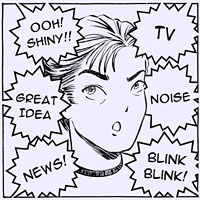
For those who have followed this blog for any length of time, you will notice and you will know certain things about me. You know I have a high energy level. You know that I am involved in a lot of endeavors, and enjoy those endeavors. You know that I like to write, sometimes a lot. You know that I enjoy investigating various aspects of life and the way things work. You also know that I believe strongly in being an open book about my life, my journey and the challenges that I face. So here goes, and if this is a surprise to anyone, you really aren't paying attention...
I am an adult with Attention Deficit Hyperactivity Disorder (Adult ADHD).
Nope, no self-deprecating humor this time. No jokes about “squirrel” or “shiny” or any of that. I have ADHD, and for the past 27 years, I have done my level best to try to deal with it in a variety of ways. The key point is that, for those 27 years, I have left out one piece of the puzzle, and entirely on purpose… medical treatment, and specifically, medication.
When I was younger, meaning around age 7 or 8, I first went on medication for ADHD. Like many kids in the 70s, I was put on Ritalin (Methylphenidate Hydrochloride) to help keep me under control. It worked amazing well in areas of focus and information retention, as well as getting good grades. What I hated about it was the person it made me; moody, angry, sullen, withdrawn, introverted, and isolated. I hated the latter elements so much that I was willing to do battle against the very benefits it provided. Over three cycles of my school life (elementary school, junior high and then in my first years at college) I used Ritalin. Each time, the same things happened. My grades and performance improved, but I became a raging tool in the process. Ultimately, I decided to just live life without the meds, because I didn’t want to be “that guy”, even if “that guy” could focus and be extremely effective.
Fast forward to today. As a part of playing with “The Hours”, investigating issues such as expectational debt, looking at my time commitments, my energy levels, where I choose to focus my time, and how it ultimately gets distributed, the tester in me decided it was time to do an even deeper dive. Enough with the immediate and superficial; let’s look at the past 20 years of my career! I spelled a lot of that out in my posts about meandering through 20 years of software testing, but I realized there was a lot I was leaving out. Not deliberately, but because I wasn’t willing to face what it meant to examine it at the time. Many of my career choices, the activities I participate in, all of the ups and the downs and the very way that I like to work (as a lone tester), all make sense when you put one phrase in context with all of it: Untreated Adult ADHD.
So what’s made me decide to do something about this now? I have three people indirectly to thank for planting this seed in my head and convincing me to act on it. Those three people are Merlin Mann, Scott Hanselman and Iris Classon. Merlin, as many of you may well realize, figures into lot of the things I talk about, because he’s where I heard about a lot of this stuff first (Expectational Debt deserves to be a service mark of Merlin Mann as far as I’m concerned ;) ). In one of the earlier Back to Work podcasts, he talked very directly and specifically about his own challenges with Adult ADHD and years of not treating it, and finally deciding to treat it. Scott Hanselman, in addition to being a vocal tech pundit, has also been quite vocal about his own challenges and issues with diabetes, and the fact that he’s been willing to put it out there for everyone to see first hand. He said he could have hid it, but why? Finally, it was on Scott’s podcast with Iris and her openly discussing her challenges with ADHD as a child and as an adult that made me decide “there’s no reason for me to hide behind it any more.” Besides, if I do hide behind it, it has to be the world's worst kept secret.
So today, I made the first steps into the fray of this. My primary physician just made the referral to the psychiatry department so that I can get this underway. Am I nervous? A little. At the same time, the tester in me would never forgive myself if I didn’t at least explore this avenue of who I am and if I can do something about it. It may turn out that I’m actually fine, and that I’m making much ado about nothing. If that’s the case, then I’ll have other avenues to explore. If I am diagnosed, there are a lot more varieties of treatment today compared to three decades ago. Also, this time, I’m not the sullen kid resenting the fact that I’m “different”, and wishing beyond hope that I could just make it go away. Instead, I now have the opportunity to actually look at this for what it is, and potentially change how I interact with my own brain. In a way, I’m excited about that. Perhaps there are benefits to being older, wiser and a bit world weary. Because I'm all of those, I’m willing to take it for what it is, and deal with it non-judgmentally, with open consideration as to where the road may lead. Like all good testers should :).
Monday, September 17, 2012
SF Ruby Book Club!
I could jump for joy about this :).
For the past several months, I've been looking at the trove of books that I have been reading, considering, looking over, and occasionally reviewing, reconsidering, and otherwise just looking at when I need them. What's missing very often is the human interaction with others. When it comes to fiction, it's easier to find people interested in talking about the books they read and what they get out oif them. Technical books are a little more challenging, because of two major issues. First, it requires a group of people be interested in the topic and the technology. Second, there are many people who don't want to engage in these discussions because, honestly, they are afraid they will be found to be technically lacking. It's like the guy who snowboards and brags about his prowess, but somehow never gets the opportunity to go up and ride with you. Or on the other hand, you invite someone and they are not the "braggadocious" type; they're just afraid that they won't be able to keep up, so they decline or refrain from participating.
Well, the San Francisco Ruby Meetup Group is starting a Ruby Book Club, and I'm all for getting into it. What's more, I'll start with the following:
"I suck at programming. I can read code, I can see what it's doing, I can even make modifications to code that already exists. Put me in front of a blank text editor, though, and say "write something", and I'm toast!"
There, that wasn't so hard!
Now I've set the expectation. I'm no great shakes at this. I feel the same about Ruby as I do about Spanish and German, two languages I studied when I was younger. I learned the rules, I learned a lot of words, I learned how to extract out of the air what I heard and read and process it and get the gist of what it meant, but I struggled with the fact that I never got good at it, and never to the point where I could converse freely. Now all these years later, I'm having the same discussion when it comes to programming, and I've decided something. I can do better.
So to those in San Francisco, I hope you'll come out and participate with me in this little adventure. It seems well suited to the goals of TESTHEAD and what I've done in the past. The first title the Book Club is considering is "The Practical Programmer", which coincidentally, is a title I recently bought out of curiosity and a desire to understand "how the other half lives". Looks like it will be more than just a curiosity now. Who knows, I may just be able to make "five new friends" (or more) in this process, and maybe, just maybe, I'll be able to get from being a bystander who hears a little here and there to one able to be part of the real conversation.
For the past several months, I've been looking at the trove of books that I have been reading, considering, looking over, and occasionally reviewing, reconsidering, and otherwise just looking at when I need them. What's missing very often is the human interaction with others. When it comes to fiction, it's easier to find people interested in talking about the books they read and what they get out oif them. Technical books are a little more challenging, because of two major issues. First, it requires a group of people be interested in the topic and the technology. Second, there are many people who don't want to engage in these discussions because, honestly, they are afraid they will be found to be technically lacking. It's like the guy who snowboards and brags about his prowess, but somehow never gets the opportunity to go up and ride with you. Or on the other hand, you invite someone and they are not the "braggadocious" type; they're just afraid that they won't be able to keep up, so they decline or refrain from participating.
Well, the San Francisco Ruby Meetup Group is starting a Ruby Book Club, and I'm all for getting into it. What's more, I'll start with the following:
"I suck at programming. I can read code, I can see what it's doing, I can even make modifications to code that already exists. Put me in front of a blank text editor, though, and say "write something", and I'm toast!"
There, that wasn't so hard!
Now I've set the expectation. I'm no great shakes at this. I feel the same about Ruby as I do about Spanish and German, two languages I studied when I was younger. I learned the rules, I learned a lot of words, I learned how to extract out of the air what I heard and read and process it and get the gist of what it meant, but I struggled with the fact that I never got good at it, and never to the point where I could converse freely. Now all these years later, I'm having the same discussion when it comes to programming, and I've decided something. I can do better.
So to those in San Francisco, I hope you'll come out and participate with me in this little adventure. It seems well suited to the goals of TESTHEAD and what I've done in the past. The first title the Book Club is considering is "The Practical Programmer", which coincidentally, is a title I recently bought out of curiosity and a desire to understand "how the other half lives". Looks like it will be more than just a curiosity now. Who knows, I may just be able to make "five new friends" (or more) in this process, and maybe, just maybe, I'll be able to get from being a bystander who hears a little here and there to one able to be part of the real conversation.
Friday, September 14, 2012
The Five Friends Rule
This next post may come off as crass, but I assure you that that is not at all my intention. Instead, I state this because I absolutely believe in the power of this idea. Over the years, I've looked at a lot of ways to figure out what has worked with me when it comes to a goal, an aspiration, or something I truly wanted to be. Those goals have fluctuated, and they have made themselves manifest at different times.
- In my youth, I wanted to be a martial artist.
- In my later youth, I wanted to be a fashion model.
- As a young adult, I wanted to be a musician.
- As a slightly older young adult, I wanted to be a great snowboarder.
- During this same time, I wanted to have a bodybuilder level physique.
- As a middle aged man, I wanted to be an excellent Boy Scout leader.
- These past few years, I have wanted to be a Rock Star level tester.
I made at least some progress in all of the areas, and many of the goals I made some pretty good progress with. Martial arts, modeling and bodybuilding were moderately successful endeavors, but ultimately they fell by the wayside. The musician, snowboarding, scouting and testing aspects of my life, however, I was able to do much more and go farther in those than I ever imagined. Why? because I surrounded myself with PEOPLE that shared those passions.
From this, I've come up with something I call the 'Five Friends Rule". Think about something in your life that has a "fitness" quotient to it:
- physical fitness
- financial fitness
- spiritual fitness
- knowledge of a given area
- performance in a given area
If you'd like to know where you reside in any of those spheres, if you were to look at your five closest friends, and examine those areas, it's likely that you would be the average of those five friends.
There's ancient wisdom in this. It's in the Aesop's Fable phrase of "birds of a feather flock together". If you hang out with the "same old crew", five years from now, you will probably be roughly in the same place as the "same old crew". Charles "Tremendous" Jones is the originator of one of my favorite quotes:
“You will be the same person in five years as you are today except for the people you meet and the books you read.”
The books we read tend to open us up to new ideas and ways of thinking (and for today's world, I would also include my Twitter stream and my blog roll). The people we hang out with, though, will help us determine whether or not we actually do something with the knowledge that we have learned.
Here's an example. You feel frustrated that you are not in good physical shape. There's lots of evidence that points to not just what you do and what you know, but who you hang out with and interact with, that will determine your overall success. If you hang out with five relatively inactive people, in the long run, your physical fitness will likely be in the average of those five closest friends. Why? Because for them to be your closest friends, they are the people you actually interact with!
To make a change that will last, very often it means, at least in that sphere, you make a new set of closest friends, or to be more kindly worded, you hang out with people who share that particular goal! People who will encourage you, inspire you, and make you want to excel and achieve. Why is this? I believe it's because the interactions are what make the long term behaviors stick. Could we achieve it all on our own? It's possible, but it's a lot more likely with a "social network", and the most powerful social network is basically the five people you are closest to.
I enjoyed being a singer, but it was my various band mates who drove me on to get better, write better and perform better over nearly a decade I tried to be a performer. My competitive snowboarding exploits were phenomenally encouraged by people of various ages, some younger and some lots older, to get out there and push myself to the limit each year. I became a solid scout leader when I committed to learning from other solid scout leaders and getting to know them better and how they were successful (which included getting myself into the Wood Badge community, and that deserves a post all its own :) ) and finally, I have made quantum leaps in my sphere as a software tester in just the past two and a half years because of the people that I have had the pleasure to interact with and call my friends. Had I not met and interacted with these people, it's likely I'd be in a very different place right now, doing very different things.
This can kind of be summed up, and now I am being a little crass for humor's sake:
- If you want to be better read, hang out with people who read a lot of books.
- If you want to be in great physical shape, hang out with people who exercise a lot.
- If you want to be wealthy, hang around with rich people.
OK, that last one is indeed crass, but it's not entirely wrong, either. Let's say your dream was that you wanted to create a successful start up. Do you do that by dreaming about it? Sure, a little bit. Do you do it by executing? Lots more of that, to be sure. By surrounding yourself with others who have done similar things, and have life lessons that will help you achieve your goals, do you think you have a better shot at being successful? Absolutely!
If "birds of a feather flock together" is the ancient message, perhaps the modern day equivalent to this is "either you change your organization (you foster the change among your friends to bring them up to your level in [fill in the blank]), or you change your organization (by finding people that share your passion for [fill in the blank] so that you can be successful at it).
Note: I am in no way advocating that you abandon your best friends if they don't share your interests in a particular area. There are lots of facets that inform our friendships with others, and to put too much emphasis on one area would make us all very shallow friends, indeed. Still, if you really do have aspirations to do something big, to change something on a macro level in your life, much of the time, the company you keep will ultimately determine how far you get.
- In my youth, I wanted to be a martial artist.
- In my later youth, I wanted to be a fashion model.
- As a young adult, I wanted to be a musician.
- As a slightly older young adult, I wanted to be a great snowboarder.
- During this same time, I wanted to have a bodybuilder level physique.
- As a middle aged man, I wanted to be an excellent Boy Scout leader.
- These past few years, I have wanted to be a Rock Star level tester.
I made at least some progress in all of the areas, and many of the goals I made some pretty good progress with. Martial arts, modeling and bodybuilding were moderately successful endeavors, but ultimately they fell by the wayside. The musician, snowboarding, scouting and testing aspects of my life, however, I was able to do much more and go farther in those than I ever imagined. Why? because I surrounded myself with PEOPLE that shared those passions.
From this, I've come up with something I call the 'Five Friends Rule". Think about something in your life that has a "fitness" quotient to it:
- physical fitness
- financial fitness
- spiritual fitness
- knowledge of a given area
- performance in a given area
If you'd like to know where you reside in any of those spheres, if you were to look at your five closest friends, and examine those areas, it's likely that you would be the average of those five friends.
There's ancient wisdom in this. It's in the Aesop's Fable phrase of "birds of a feather flock together". If you hang out with the "same old crew", five years from now, you will probably be roughly in the same place as the "same old crew". Charles "Tremendous" Jones is the originator of one of my favorite quotes:
“You will be the same person in five years as you are today except for the people you meet and the books you read.”
The books we read tend to open us up to new ideas and ways of thinking (and for today's world, I would also include my Twitter stream and my blog roll). The people we hang out with, though, will help us determine whether or not we actually do something with the knowledge that we have learned.
Here's an example. You feel frustrated that you are not in good physical shape. There's lots of evidence that points to not just what you do and what you know, but who you hang out with and interact with, that will determine your overall success. If you hang out with five relatively inactive people, in the long run, your physical fitness will likely be in the average of those five closest friends. Why? Because for them to be your closest friends, they are the people you actually interact with!
To make a change that will last, very often it means, at least in that sphere, you make a new set of closest friends, or to be more kindly worded, you hang out with people who share that particular goal! People who will encourage you, inspire you, and make you want to excel and achieve. Why is this? I believe it's because the interactions are what make the long term behaviors stick. Could we achieve it all on our own? It's possible, but it's a lot more likely with a "social network", and the most powerful social network is basically the five people you are closest to.
I enjoyed being a singer, but it was my various band mates who drove me on to get better, write better and perform better over nearly a decade I tried to be a performer. My competitive snowboarding exploits were phenomenally encouraged by people of various ages, some younger and some lots older, to get out there and push myself to the limit each year. I became a solid scout leader when I committed to learning from other solid scout leaders and getting to know them better and how they were successful (which included getting myself into the Wood Badge community, and that deserves a post all its own :) ) and finally, I have made quantum leaps in my sphere as a software tester in just the past two and a half years because of the people that I have had the pleasure to interact with and call my friends. Had I not met and interacted with these people, it's likely I'd be in a very different place right now, doing very different things.
This can kind of be summed up, and now I am being a little crass for humor's sake:
- If you want to be better read, hang out with people who read a lot of books.
- If you want to be in great physical shape, hang out with people who exercise a lot.
- If you want to be wealthy, hang around with rich people.
OK, that last one is indeed crass, but it's not entirely wrong, either. Let's say your dream was that you wanted to create a successful start up. Do you do that by dreaming about it? Sure, a little bit. Do you do it by executing? Lots more of that, to be sure. By surrounding yourself with others who have done similar things, and have life lessons that will help you achieve your goals, do you think you have a better shot at being successful? Absolutely!
If "birds of a feather flock together" is the ancient message, perhaps the modern day equivalent to this is "either you change your organization (you foster the change among your friends to bring them up to your level in [fill in the blank]), or you change your organization (by finding people that share your passion for [fill in the blank] so that you can be successful at it).
Note: I am in no way advocating that you abandon your best friends if they don't share your interests in a particular area. There are lots of facets that inform our friendships with others, and to put too much emphasis on one area would make us all very shallow friends, indeed. Still, if you really do have aspirations to do something big, to change something on a macro level in your life, much of the time, the company you keep will ultimately determine how far you get.
Thursday, September 13, 2012
AgilePalooza: A Semi-Live Blog

I'm sitting in a conference room in Santa Clara with my Parent Company, Rovi, and a number of other participants, and we are having a private session of AgilePalooza. This was prompted by the fact that Rovi, as a whole, has decided to embrace Agile. Sidereel has been "Agile" since day one and before we were acquired, but Rovi has a number of different product lines, many of which are from acquired companies. Because of this, they are making a much greater leap than the one Sidereel made. As such, I thought it would be interesting to see how this whole "Agile" thing is being taught for those who don't already play with it. Seeing as I was thrown in the deep end last year and had to make it up as I went along, I also wanted to see how this is "supposed to work". My thanks to the Sidereel team for giving me a day to explore this.
Our first part of the day started with Steve Davis of Davisbase Consulting, and he is describing the philosophy behind Agile, but more to the point, the stumbling blocks that get in the way of companies successfully implementing Agile. Steve made a case that, while may organizations provide feedback as to what works and what doesn't, there's a huge part of the feedback loop missing… the companies that tried Agile and bailed on it. The importance with Agile and getting a team to be effective isn't really about process, it's about where they ultimately want to be. "Begin with the end in mind" to borrow from Steven Covey's second Effectiveness Principle.
A challenge with adopting Agile is that a team, a company, and a culture needs to believe that it's going to actually work. To that end, getting involved early and learning early is critical. Believing that you can be Agile is good, but it's not enough, and more to the point, it's not a one time event. Teams need to work continuously to get better and actually understand what they are doing, what they appreciate, what they hate, and what areas can be improved upon. There will be challenges, and there will be cultural issues that will either get masked by the process, or it will be ripped bare and made public by the process. How we handle them is important, and often it's very incrementally and iteratively.
I'm impressed with how the concepts of "Shuhari" (Obey, Digress, Transcend) and "Kaizen" (Continuously Improve) come into play here. Shuhari is a concept within martial arts where learning and development along with mastery often supersede the elemental forms that we fist slavishly follow. Mastery is more than rote following. Sometimes it requires transcending and changing the old forms. Kaizen is the idea of continuous improvement, the actual doing of the concepts that make up Shuhari (or Agile, in this context). Mastery, though, comes down to doing, and doing a lot. Just slapping a label like Agile onto a company will not make it Agile. Habits may also involve people differently. In my own work, I have opportunities to "play by the rules" of Agile, but sometimes I have to make up my own rules just because of the nature of what I do. Just because there is a system, doesn't mean that being a slave to that system will be effective. Perhaps this is a difference between lover case "agile" and uppercase "Agile". It's not a one size fits all situation; some things may have to be adapted. Regardless, we can't just pay lip service to it, we have to actually do it. The Shuhari style terms for Agile are "Knowing, Doing, Becoming".
The next step goes beyond the process, and involves the people. Ultimately, it's the people that make an Agile transition effective. It's common to have people who make the move to Agile still keep their same infrastructure as before. In many ways, this alignment entrenches old behaviors and habits, because very often we are beholden to the people that we interact with, rather than our involvement with an arbitrary ideal team concept. If you must "measure" to help make your teams effective, try to utilize positive measurements. Are you a good team? Do you have good team members? Are you individually good at what you are supposed to be good at? Your customers will determine the first one. Your team members may help determine how you are doing with the second one. Ultimately, number three is entirely up to the individual.
We are social beings. Social community is more than a buzzword for networks like Facebook, Quora or Pinterest. It's a real currency and the way that we are genuinely motivated. When we learn socially, we learn dependably and often better than any other manner. Our social connections in our organizations will often drive the way that we learn and how we apply what we do. We also do things less for the work, less for the sake of it, and much more for the love (or at least care and appreciation) of our immediate team. Ultimately, though, if you must measure, measure based on the customer and how happy they are with what has been delivered and continues to be delivered.
After the primary presentation. we had a round table discussion specific to questions asked by the attendees, and some discussions about challenges faced by those looking to implement Agile. One of the most common is impatience. Interestingly, it's not executive impatience that causes problems, it's the practitioners' impatience. This is where having a clear and strong vision, and a realistic time frame is critical. Additional to the impatience is to try to figure out how to determine if we are actually making real progress. The answer is based on the features and whether or not they are actually being used by their customers. By comparison, when customer satisfaction is actually measured, a lot of pet projects go by the wayside. Though a long term goal is to get beyond looking at the end of the quarter or the current stock price, the truth is, those are relevant measures, and if both are declining, it's hard to keep a transitional initiative alive and thriving. Agile transitions don't happen overnight, especially for organizations that have set formats and established cultures. It takes years to develop that, and often, it will take years to develop out of it. If you have to measure for metrics, measure for the change you are hoping to achieve. Also, metrics are not set in stone, nor should they be. Once you have established a pattern, get rid of the metric.
As we were discussing dependencies, I couldn't help but chuckle when the facilitator asked what some "best practices" were to help resolve issues with those dependencies (I refrained from saying "there are no such thing as best practices, just good practices in context!", but I figured I was in a different crowd, so I didn't say it there... I'm saying it here though ;) ). This is a real problem for an organization that has products that depend on each other to make a cohesive strategy. Sidereel is in many ways a standalone product, but as far as Rovi is concerned, its an integral part of its digital media offerings. Things we do have an effect on other product lines now, and thus, Sidereel is a dependency for other initiatives. It's interesting to be reminded of that fact. Dependencies crop up all the time, so it's better to be aware of them and how to work with them, rather than having them become a stumbling block. Keeping on top of issues and dependencies can help make sure that the challenges associated with them are minimized.
We had a discussion of splitting focuses and projects, and I like the idea of "one backlog, one team". Instead of having side projects and products, the team has one back log, and that backlog is visible to all. This way, it becomes possible to see all of the work that the team is facing, and how to decide what they will prioritize and what will get worked on, and what won't be. Transparency is critical; having too many hidden items can crush a teams momentum. It also helps set up the real expectations for the team, so that everyone can address the work load in a practical way (dealing with Expectational Debt; I like it :) ).
A great deal of the later discussions have been specific to the tool implementation and how to utilize the tool (VersionOne is a tool vendor, and they are sponsoring today's event). While a lot of the discussion is being spent on how to implement Agile using VersionOne, there's still some good ideas being discussed and some perspectives I have not considered. Issues such as using Scrum in with distributed teams, how to carve up one large team into multiple smaller teams, making sure that a key technology is not being modified by two separate teams simultaneously (talk to each other!), and how to get multiple scrum teams to communicate. One interesting question that branched into a good discussion was how we could get more action out of a retrospective. That's a topic that could take an entire day, but it gave me a chance to share a good practice we use called a mini-retro. rather than wait two weeks or an entire month before a retrospective, we have a mini-retro every week, with simple parameters and the goal of getting a small number of action items to focus on for that coming week, rather than have a large list of action items that might prove to be overwhelming if taken on at a regular retro.
Following lunch, I had a chance to talk to the vendors and consulting team for VersionOne, and discovered that we knew a lot of the same people (my ears perked up when one of the consultants made a comment and quoted Dale Emory :). When he saw me perk up, e decided he had to find out how I knew about Dale, and a lot of great talking (and some laughs) ensued.
It's been fun, thanks for playing along.
Wednesday, September 12, 2012
The Ultimate Pair Test: Teaching My Son to Drive
The past few weeks have been interesting, in that I have had to overcome a natural fear and put my fate into someone else's hands. This someone else happens to be my 16 year old son. He has embarked down the road of learning how to drive, and I am the one that is doing most of the drive time chaperoning and experiments/instruction. As I was looking at this, it struck me how like pair testing it is, and how, so often, we as the senior member can get frustrated at times with the efforts of the junior associate we are working with.
As I get into the car, I realize that there is a rather large checklist of things to deal with. Case in point, this morning my son needed to get to an early morning meeting before school. Rather than just go along with driving him, I gave him the opportunity to drive himself, with me in the car. As I had him get started, it brought to mind immediately the quantity of steps that I do automatically every time I get into the car. Adjust the mirrors (actually, I don't; they're already set for me), put the key in the ignition, fasten the seat belt, turn on the lights, check the gas, take off the emergency brake, run the wiper once or twice to clear the dew/moisture off the windshield, and that's all before even pulling on the gear shift to put the car in gear. Automatic steps to me, but somewhat foreign to my son. It amazed me how many things I had to remind him to consider, and even with all that, because it was dark when we left, it wasn't until we arrived at the destination that we both realized that he hadn't taken off the emergency brake (oops!).
The beauty of pair testing, more than just having two eyes on the the same product, is that we very often get complacent in our knowledge and those things that we do automatically. It was humbling to think of all the things that I had learned over time to do the steps necessary to drive a car. Things that I take totally for granted, but that, when put in the hands of a novice, can be quite overwhelming. I also think of this when I consider my challenges and adventures in programming. There's so many moving parts, so many things to consider, so many aspects that tie together and, if I forget one, there will be issues. Well, the same goes for driving a car. As I watched my son inch out into traffic, get onto the freeway, get off on exists, approach stop signs, park along the side of the curb, I was flooded with so many details of what I should be telling him, and truly, those details don't really help very much in the moment. Yes, he has a lot he needs to remember, but throwing more and more things at him won't help him remember more or faster. The skills have to come in time, with practice and with effort, and I have to be there to encourage him along the way.
Testers, we have great opportunities in our work days, via forums, through Twitter, and through programs like Weekend Testing and SummerQAmp, not to mention AST BBST classes and other avenues, to help teach our "children" and our "siblings" how to drive. Being the passenger in this situation is nothing if not educational. We really see how rationally and calmly we can explain situations and avenues/challenges the driver may face (or not so rationally and calmly in some cases). Substitute the word driver with tester or programmer, and we see that the same situation applies in those spheres. We have a lot if information to impart, and our "drivers" have to figure it out. If you feel frustrated or wondering if they are getting it, put yourself in the passenger seat of a first (or second, third, or fourth) time driver and think of how they are processing all of the areas they have to control. Feel a little more compassionate? Great, now bring that back to your testers and programmers, and remember, they have to learn the rules of the road, too.
As I get into the car, I realize that there is a rather large checklist of things to deal with. Case in point, this morning my son needed to get to an early morning meeting before school. Rather than just go along with driving him, I gave him the opportunity to drive himself, with me in the car. As I had him get started, it brought to mind immediately the quantity of steps that I do automatically every time I get into the car. Adjust the mirrors (actually, I don't; they're already set for me), put the key in the ignition, fasten the seat belt, turn on the lights, check the gas, take off the emergency brake, run the wiper once or twice to clear the dew/moisture off the windshield, and that's all before even pulling on the gear shift to put the car in gear. Automatic steps to me, but somewhat foreign to my son. It amazed me how many things I had to remind him to consider, and even with all that, because it was dark when we left, it wasn't until we arrived at the destination that we both realized that he hadn't taken off the emergency brake (oops!).
The beauty of pair testing, more than just having two eyes on the the same product, is that we very often get complacent in our knowledge and those things that we do automatically. It was humbling to think of all the things that I had learned over time to do the steps necessary to drive a car. Things that I take totally for granted, but that, when put in the hands of a novice, can be quite overwhelming. I also think of this when I consider my challenges and adventures in programming. There's so many moving parts, so many things to consider, so many aspects that tie together and, if I forget one, there will be issues. Well, the same goes for driving a car. As I watched my son inch out into traffic, get onto the freeway, get off on exists, approach stop signs, park along the side of the curb, I was flooded with so many details of what I should be telling him, and truly, those details don't really help very much in the moment. Yes, he has a lot he needs to remember, but throwing more and more things at him won't help him remember more or faster. The skills have to come in time, with practice and with effort, and I have to be there to encourage him along the way.
Testers, we have great opportunities in our work days, via forums, through Twitter, and through programs like Weekend Testing and SummerQAmp, not to mention AST BBST classes and other avenues, to help teach our "children" and our "siblings" how to drive. Being the passenger in this situation is nothing if not educational. We really see how rationally and calmly we can explain situations and avenues/challenges the driver may face (or not so rationally and calmly in some cases). Substitute the word driver with tester or programmer, and we see that the same situation applies in those spheres. We have a lot if information to impart, and our "drivers" have to figure it out. If you feel frustrated or wondering if they are getting it, put yourself in the passenger seat of a first (or second, third, or fourth) time driver and think of how they are processing all of the areas they have to control. Feel a little more compassionate? Great, now bring that back to your testers and programmers, and remember, they have to learn the rules of the road, too.
Subscribe to:
Posts (Atom)